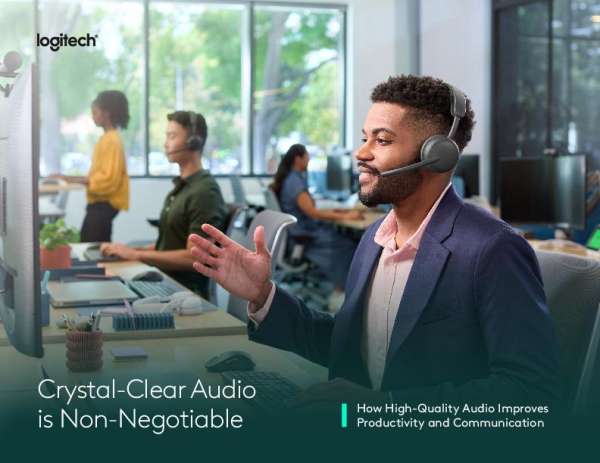
High-quality audio has shifted from a nice-to-have to a basic requirement because of how people work today. More than 80% of U.S. employees with remote-capable jobs now work flexibly or fully outside the office. That means most meetings, check-ins, and customer conversations depend on audio and video tools.
Yet there’s a clear gap between how people work and the tools they’re given. Data shows that fewer than 40% of organizations provide external headsets, webcams, or other peripherals to improve audio and video. At the same time, 85% of employees struggle with audio issues when they rely on built-in computer microphones and speakers.
This has real business impact:
- Misunderstandings and repeated explanations slow down work.
- Meeting fatigue increases when people strain to hear or be heard.
- Customer and partner interactions feel less professional.
It’s no surprise that, according to Frost & Sullivan, 94% of businesses are expected to adopt professional headsets by 2026. Organizations are reimagining their audio setup to support productivity, engagement, and employee satisfaction across in-office, remote, and hybrid teams.




 Sign in with LinkedIn