Help your customers assess face redaction's capabilities and limits. This AlgoFace blog covers remaining identity risks and production validation measures for engineering teams. Read the blog to guide more informed customer conversations, then contact your TD SYNNEX salesperson for help qualifying opportunities and planning next steps.
What does face redaction actually protect?
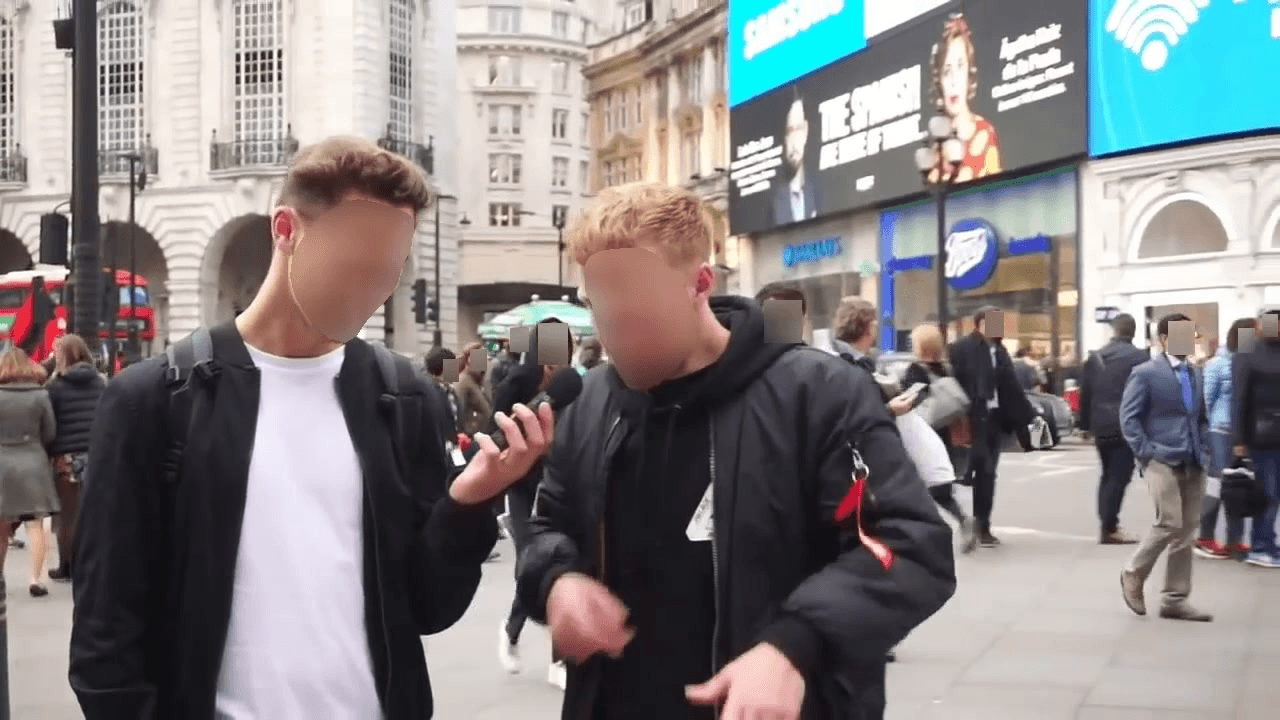
Face redaction is designed to reduce exposure of visible facial identity while keeping the rest of the scene useful.
In practice, a face-redaction pipeline will:
- Detect visible faces in images or video (including changes in pose, motion, and lighting).
- Track each face across frames so the mask stays aligned as people move.
- Redact the facial region (for example, with blur or another masking effect).
- Output a redacted stream under defined access and retention policies.
This approach helps organizations:
- Minimize identity exposure by removing or degrading facial detail.
- Preserve operational value by keeping actions, movement, and environment visible.
- Support data minimization requirements by limiting how much identifiable imagery enters downstream systems.
- Enable controlled sharing by producing a privacy-enhanced version of the footage for partners, media, or internal stakeholders.
When implemented at the edge, face redaction can also keep unredacted frames out of the cloud and general-purpose storage, which helps reduce the impact of any downstream breach or misconfiguration.
It is important to note that face redaction does not remove a person from the scene. Clothing, gait, tattoos, location, timestamps, license plates, voice, reflections, and metadata can still create re-identification risk. Face redaction should therefore be treated as one privacy-by-design control within a broader governance, security, and legal framework.
Is face redaction the same as anonymization or automatic GDPR compliance?
No. Face redaction and anonymization are related but not the same, and face blur alone does not automatically make a system GDPR compliant.
Face redaction focuses on obscuring a direct visual identifier—the face. It is accurate to say that redaction can reduce a defined identity risk under stated conditions. However, a person may still be identifiable from:
- Distinctive clothing, tattoos, body shape, or gait
- Location, time, companions, or vehicles
- Audio (spoken voice) and on-screen reflections
- Metadata or links to other records
Under GDPR (for example, Article 25 and Recital 26):
- Controllers must implement data-protection by design and by default, including data minimization.
- Identifiability must be assessed using the means reasonably likely to be used by the controller or another person.
Face redaction can be one of those technical measures, but compliance also depends on:
- Purpose and legal basis for processing
- Transparency and data-subject rights
- Access controls, retention rules, and security
- The actual effectiveness of redaction in your specific use case
Similarly, NIST guidance (e.g., NISTIR 8053) notes that de-identification can reduce privacy risk without eliminating the possibility of re-identification. A claim of full anonymization requires a broader assessment of all remaining identifiers and realistic re-identification paths, not just the presence of a blur over faces.
How should we design and validate an edge face-redaction system?
Edge face redaction processes video near the camera or on a local server, so unredacted frames do not need to travel to a remote service before protection is applied. This can:
- Reduce data movement of identifiable imagery.
- Limit systems that ever see raw faces.
- Lower live-video latency and support low-connectivity environments.
A typical real-time edge pipeline includes:
- Ingest – Decode camera streams, recorded video, or still images.
- Detect – Locate visible faces across scale, pose, motion, and lighting changes.
- Track – Maintain stable mask regions as faces move across frames.
- Redact – Apply blur or another masking transformation to the facial region.
- Validate – Identify missed faces, late masks, coverage loss, and incomplete redaction.
- Output – Encode and route the redacted stream under defined access and retention policies.
Privacy performance depends on the entire sequence, not a single detector score. For example, a strong detector is not enough if tracking drops the mask for several frames.
To validate an edge face-redaction system in your environment, teams should monitor:
- Missed-face rate – Percentage of visible faces that receive no mask.
- Leakage frames – Frames exposed before detection or during track loss.
- Coverage quality – Whether masks fully cover identifying facial regions.
- Scenario performance – Results for small faces, crowds, motion blur, low light, occlusion, and non-frontal poses.
- Latency and throughput – Sustained performance at target resolution, frame rate, and face count.
- False-positive impact – Unnecessary masking that may reduce evidentiary or operational value.
- Re-identification resistance – Whether people or models can still link subjects using redacted output plus surrounding data.
- Failure behavior – Whether the system fails closed, alerts operators, or passes raw frames when capacity is exceeded.
Edge deployment itself is not automatically private. Temporary buffers, diagnostic logs, administrator access, and the original camera feed all remain part of the threat model. Aligning the technical pipeline with governance, security controls, and frameworks such as the NIST Privacy Framework helps organizations reimagine their video architecture so that facial identity is no longer the default output.




 Sign in with LinkedIn