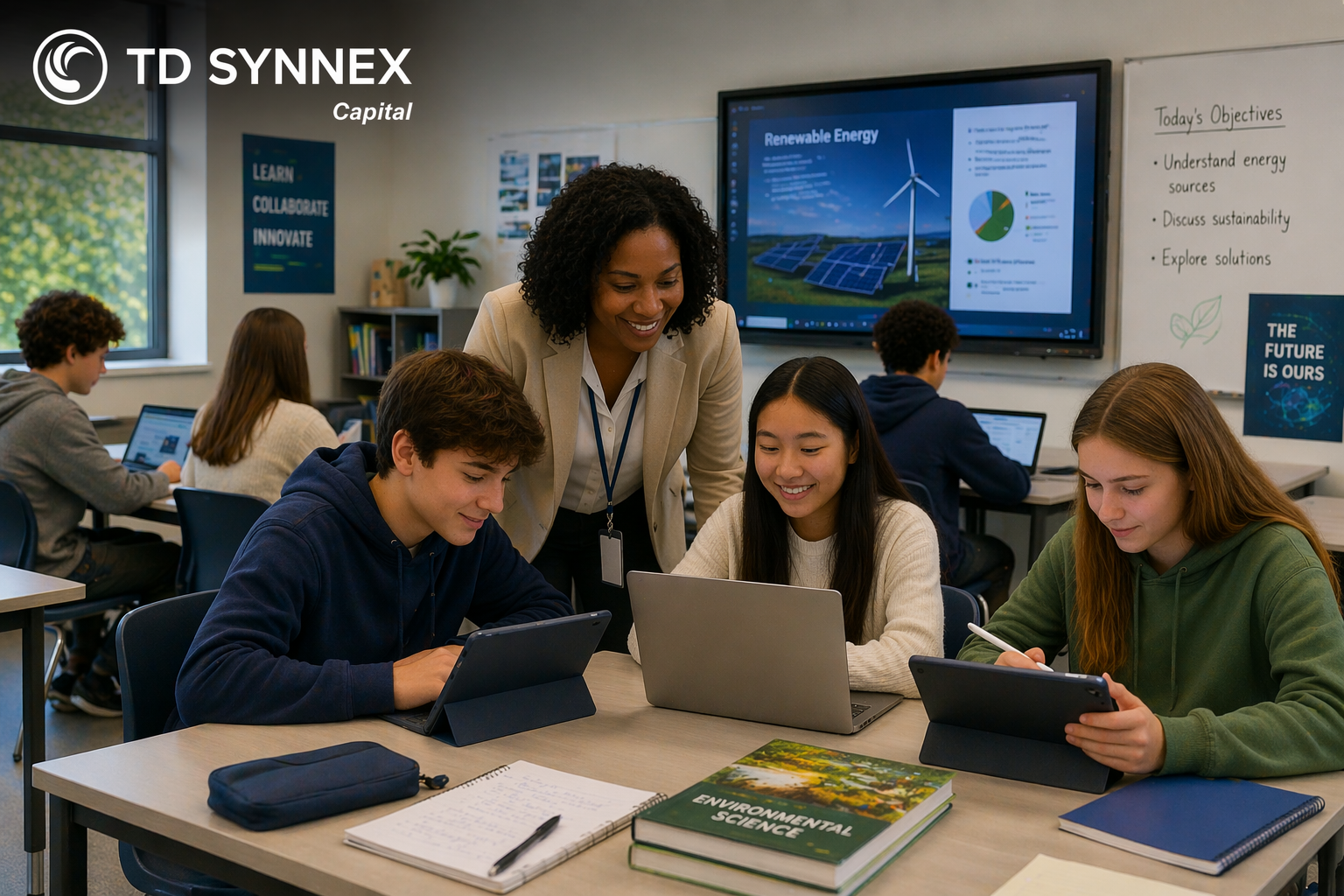
As technology continues to reshape education, schools face the challenge of balancing innovation with long-term budget planning. Explore how flexible technology strategies can help educators create modern learning environments while making every investment count.
Why should schools consider leasing education technology instead of buying it?
Many schools still follow a traditional purchase model: buy devices and stretch them for as many years as possible. While this feels budget-friendly, it often creates hidden costs and performance issues.
Leasing helps schools rethink that approach in several ways:
- Consistent refresh cycles: Instead of waiting for devices to fail, schools can plan regular refreshes so students and teachers always have reliable systems.
- Better learning experience: Aging devices slow down instruction. Teachers lose time troubleshooting, IT teams spend more time on repairs, and students struggle with outdated tools.
- Aligned with annual budgets: Leasing spreads costs over time, making it easier to match technology investments to yearly budget cycles.
- Lower surprise costs: With newer, standardized devices, schools can reduce unexpected repair and maintenance expenses.
- Improved security and compatibility: Current devices are more likely to support the latest software, security updates, and testing platforms.
In short, leasing helps schools move from a reactive, break-fix model to a planned, strategic approach to classroom technology.
How does leasing help schools stay current and manage risk?
Leasing gives schools a structured way to keep technology aligned with how education is delivered today.
Key benefits include:
- Staying current with technology trends: Built-in refresh options at the end of the lease term make it easier to adopt newer devices and capabilities on a predictable schedule.
- Uniform classroom standards: Leasing supports district-wide standards for devices and configurations, so teachers and students work with similar tools across classrooms and schools.
- Better cybersecurity: Newer devices are more likely to receive timely security patches and support modern security features, reducing risk for the district.
- Software and testing compatibility: Standardized, up-to-date hardware helps ensure that learning platforms, collaboration tools, and standardized testing applications run as intended.
By using leasing strategically, schools can reimagine technology as an ongoing service that evolves with curriculum, rather than a one-time purchase that quickly becomes outdated.
How does leasing address supply chain delays and budget constraints?
Recent supply chain challenges have made it harder for schools to get the exact devices they planned for, especially during critical windows like back-to-school, one-to-one rollouts, and district-wide refreshes.
Leasing helps schools navigate this environment by:
- Spreading higher upfront costs: If only higher-spec, more expensive models are available, leasing allows schools to spread those costs over time instead of paying a large premium upfront.
- Maintaining deployment timelines: Rather than delaying rollouts or disrupting learning schedules while waiting for backordered devices, schools can move forward with available inventory and finance it through a lease.
- Supporting agility: Leasing gives procurement teams more flexibility to respond to stock changes and pricing shifts without constantly reworking budgets.
By using a partner like TD SYNNEX Capital, schools can align financing with their academic calendar, keep projects on schedule, and reshape technology procurement into a more predictable, equitable experience for students, teachers, IT teams, and the broader educational community.




 Sign in with LinkedIn